
The gym isn't a fashion show. The field isn’t a rehearsal. When you’re living the Sovereign mindset, every piece of kit you put on your body is either a tool or a liability. There is no middle ground.
Most guys treat tactical fitness gear like they’re picking out a costume for a weekend event. They buy what looks "operator" in a filtered Instagram photo, but the second the heart rate hits 180 and the sweat starts stinging their eyes, that gear fails. It chafes, it shifts, it holds water like a sponge, and it slows you down when speed is the only thing that keeps you alive.
This is 'The Sovereign Series.' We don't do soft. We don't do "good enough." We focus on self-reliance, discipline, and the raw reality of veteran-level training. If your gear is holding you back, you aren't training: you're just playing dress-up.
Here are the seven fatal mistakes you’re making with your tactical fitness gear and exactly how to fix them before your next session.
1. Buying "Tactical" Cotton Instead of Performance Fabrics
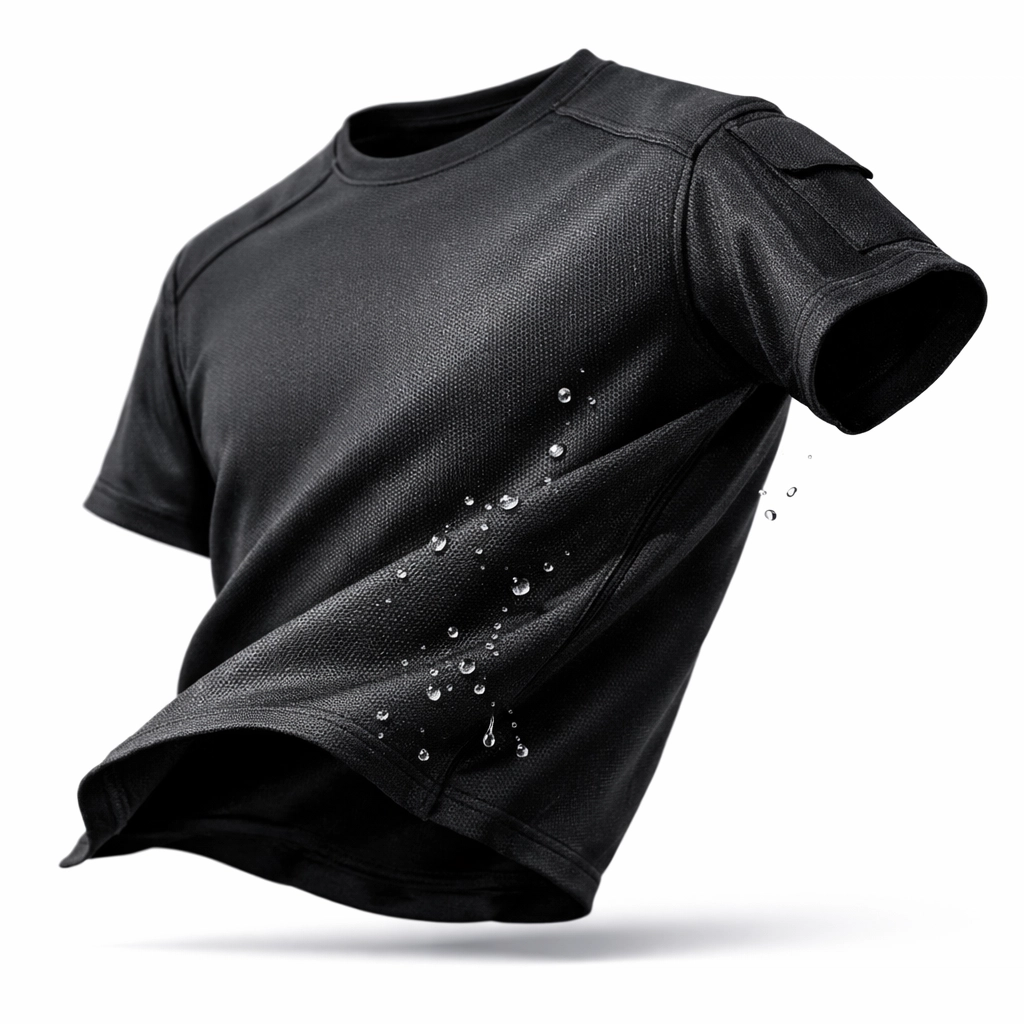
The biggest lie in the industry is that a shirt is "tactical" just because it’s olive drab or has a flag on the sleeve. If that shirt is 100% heavy cotton, you’ve already lost. Cotton is the enemy of performance. It absorbs sweat, doubles in weight, and turns into a cold, wet rag the moment you stop moving.
In the veteran community, we know "embrace the suck" is a mantra, but there’s no reason to suck more than necessary because of poor fabric choices. You need performance activewear for veterans that actually breathes.
The Fix: Transition to high-performance synthetic blends or moisture-wicking tech. You want something that moves with you, not against you. Our Class 5 Performance veteran shirts are engineered for the Sovereign mindset: built to handle the grit of a 12-mile ruck or a high-intensity CrossFit session without turning into a soaked anchor. Look for "slick" designs that reduce friction during dynamic movements.
2. Incorrect Holster Orientation (The "Hollywood" Cant)
If you’re training in tactical gear that includes a sidearm, how you carry matters more than what you carry. Many guys set their holsters at extreme, aggressive angles because they think it looks faster or more "tactical." In reality, an extreme cant prevents a natural, consistent grip.
If you have to contort your wrist to get a master grip while your lungs are burning and your hands are shaking, you’ve failed the fundamentals.
The Fix: Keep your holster vertical or at a very slight forward cant. This allows for a natural draw stroke that works every time, whether you’re standing still or moving to cover. Test your draw after a set of heavy thrusters. If your grip feels awkward, your gear is wrong.
3. The "Knee-Knocker" Drop Leg Holster
We’ve all seen it. A guy has a drop leg holster strapped so low it’s practically riding on his kneecap. It looks cool in movies, but the physics are a nightmare. Every time you run, that holster becomes a pendulum, slamming against your leg, throwing off your gait, and eventually chafing your skin raw.
The Fix: Position your drop leg holster as high on the thigh as possible. It should be just below your belt line: high enough to stay stable during a sprint but low enough to clear your plate carrier. If it’s bouncing, it’s too low. If you're wearing CrossFit shirts for men designed for high-intensity movement, you’ll notice immediately how much better a high-ride holster integrates with your body’s natural mechanics.
4. Packing Your Fears (The Over-Encumbrance Trap)
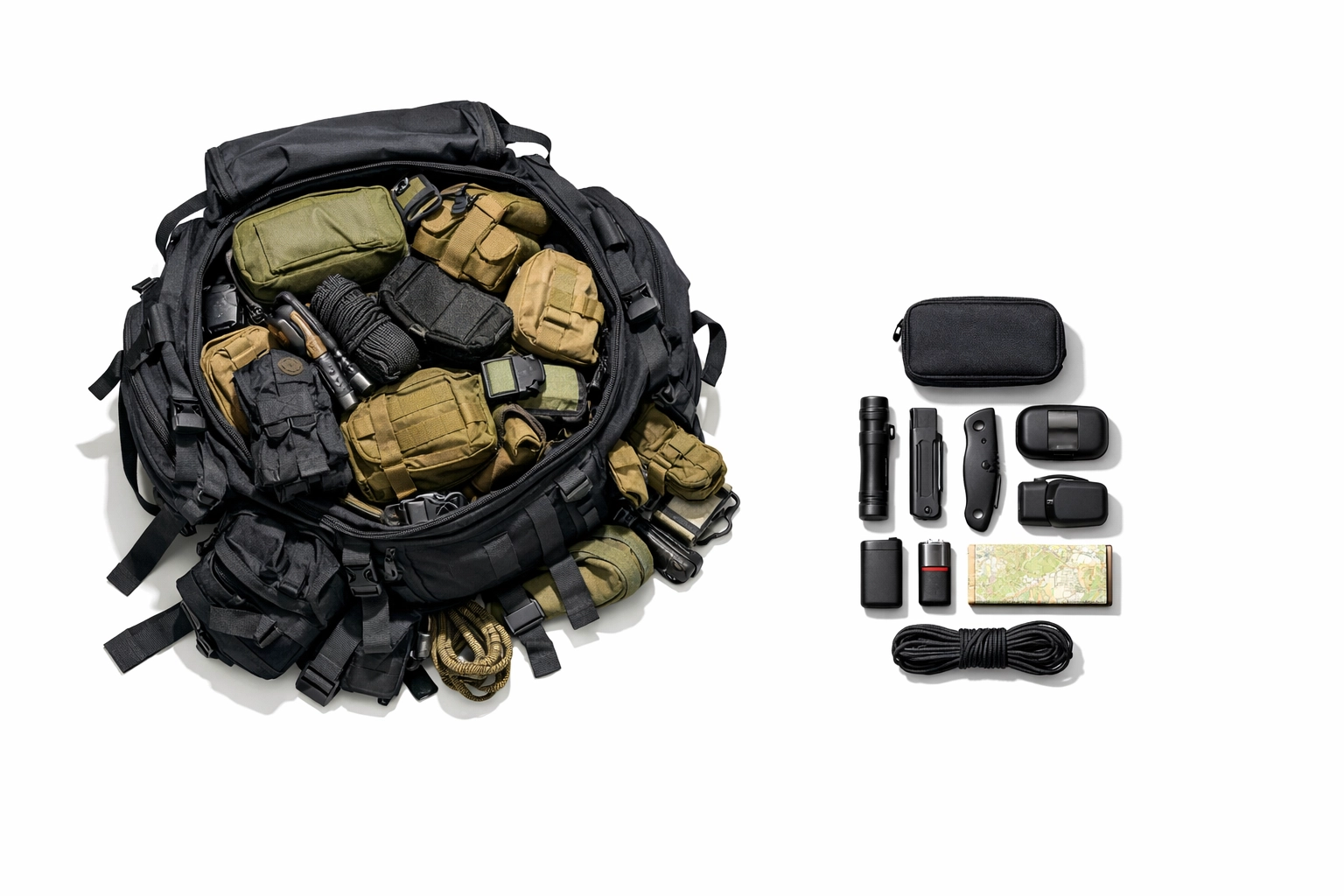
Self-reliance doesn't mean carrying everything you own on your back. The mistake most beginners make is overpacking their ruck or plate carrier "just in case." They carry three knives, four extra mags for a range session, and two liters of water for a twenty-minute workout.
Excess weight kills speed. Speed kills the enemy. In tactical fitness, excess weight just kills your joints and destroys your form.
The Fix: Define your purpose before you kit up. If the mission is a 5-mile run, you don't need a full combat loadout. Streamline. Carry only what is essential for the specific training objective. A Sovereign man knows exactly what he needs to survive and nothing more. If you're looking to upgrade your foundational layers, check out the Class 5 Performance catalog for gear that prioritizes lean efficiency over bulk.
5. Ignoring the "Fit" of Your Plate Carrier
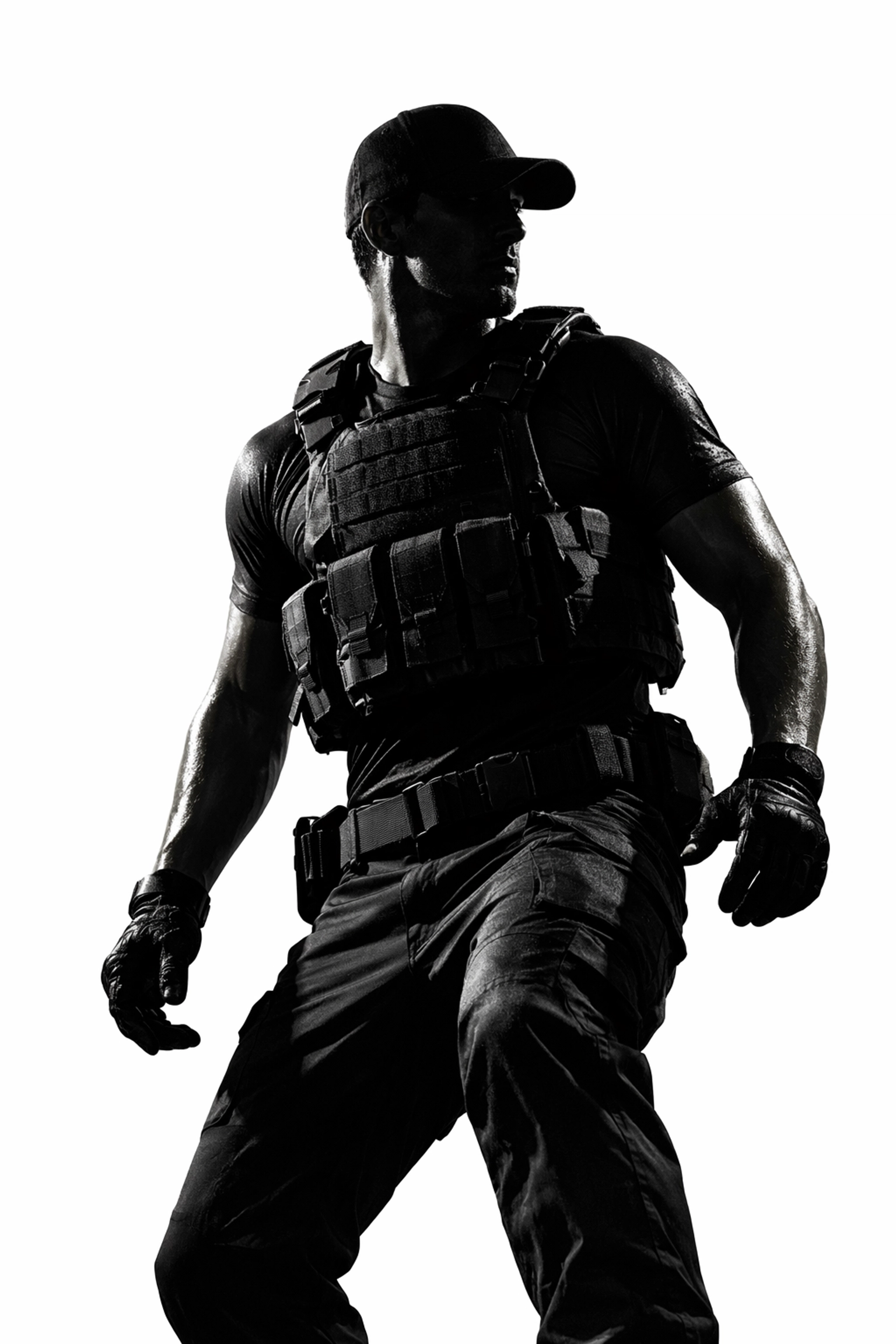
A plate carrier shouldn't feel like a loose vest; it should feel like an extension of your ribcage. If your plates are bouncing against your chest when you do burpees, or if the shoulder straps are digging into your traps because they’re too wide, you’re setting yourself up for injury.
Ill-fitting gear creates "hot spots": areas where friction and pressure cause blisters or sores. In a real-world scenario, a hot spot can take you out of the fight faster than exhaustion.
The Fix: Adjust your carrier so the front plate sits at the top of your sternum (the "notch" at the base of your throat). It should be tight enough that you can still take a full breath, but it shouldn't shift when you jump. Pair your carrier with military fitness apparel that features flat-lock seams to prevent the carrier from grinding the fabric into your skin.
6. Training for the Mirror, Not the Mission
This is a mental gear mistake. Too many guys use "tactical" gear but follow a bodybuilding routine. They want big biceps and a wide chest, but they can't climb a 10-foot wall or ruck 10 miles with 50 pounds.
Tactical fitness is about functional utility. If your gear looks like you’re ready for a raid but your body is only ready for a photo shoot, you’re a fraud.
The Fix: Prioritize functional movements. Your training should include rucking, sprinting, pull-ups, and carries. Wear veteran owned apparel that is built for the "embrace the suck" reality of actual work. If you need help structuring your business or fitness approach to match this high-stakes intensity, you might even look into our consulting services to streamline your operations with the same discipline.
7. Neglecting Situational Awareness During Training
Mistake number seven is the most dangerous: turning your brain off because you're "just at the gym." Tactical gear is a reminder that you are training for high-stakes environments. If you’re wearing the gear but staring at your phone between sets, you’re failing the mindset.
The Fix: Develop scanning habits. Even in a commercial gym, know where your exits are. Train yourself to recognize patterns in the room. Stay fully engaged. The gear you wear: from your boots to your Class 5 Performance gear: should serve as a uniform for a mind that is always "on."
The Sovereign Standard
At the end of the day, your gear is a reflection of your discipline. If you settle for cheap, ill-fitting, or purely aesthetic equipment, you are telling yourself that your performance doesn't actually matter.
The Sovereign man doesn't settle. He chooses military fitness apparel that stands up to the grit. He fixes his holster because he values the draw. He sheds unnecessary weight because he values the move.
Stop making these rookie mistakes. Audit your kit. If it doesn't serve the mission, cut it loose. If it isn't durable enough to survive the suck, replace it.
Ready to gear up with apparel that actually works? Visit Class 5 Performance and get the kit that matches your mindset.
For those looking to build something bigger than just themselves: whether it’s a brand or an app: reach out through our intake page and let’s see if you’ve got the discipline to join the ranks of our owners.
Stay dangerous. Stay Sovereign.


